Compliant Workwear Built for High-Risk Environments
FR Clothing and Safety Apparel in Williston for crews operating under strict flame resistance and visibility regulations
Shirtworx provides flame-resistant clothing and safety apparel to businesses in Williston and the surrounding region, outfitting crews who work in oilfield, construction, and industrial settings where compliance is not optional. You receive garments designed to meet NFPA 2112, NFPA 70E, or ANSI standards, depending on the hazards your team faces daily. This service fits companies managing large crews, replacing worn-out gear, or responding to updated safety protocols that require documented compliance.
The apparel is constructed from fabrics treated or engineered to self-extinguish when exposed to flame, reducing burn injury risk during flash fire or arc flash incidents. You select from coveralls, shirts, pants, and jackets that balance protection with breathability and range of motion. Shirtworx can add your company logo or employee names using embroidery methods that do not compromise the garment's protective properties, keeping your crew identifiable without sacrificing safety.
Reach out with your crew size and compliance requirements to discuss apparel options and bulk pricing for ongoing uniform programs.
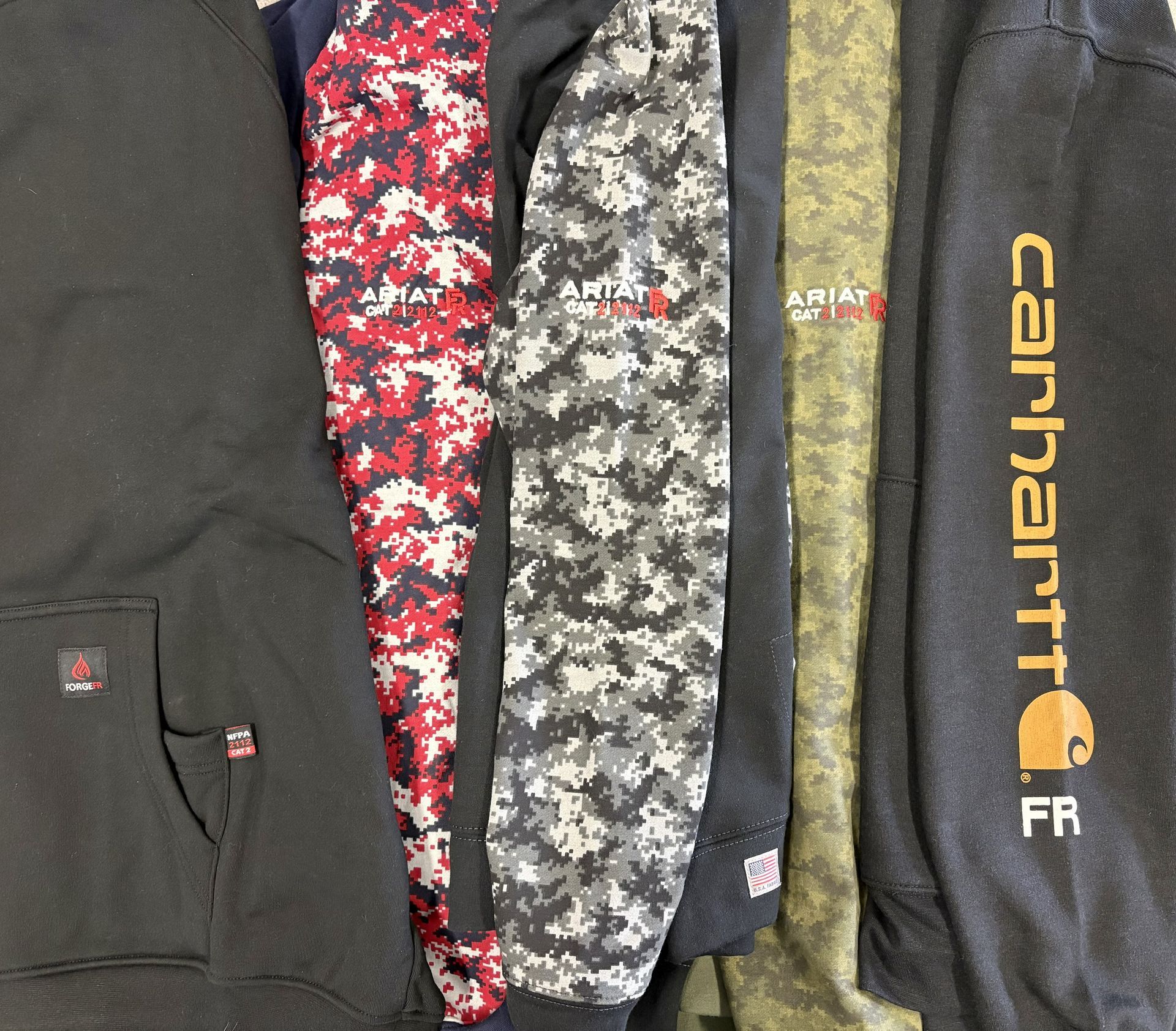
Once your team is outfitted, you notice that workers show up to sites wearing garments that meet inspection standards without question, reducing delays and documentation issues during safety audits. The clothing withstands repeated washing and daily wear while maintaining its flame-resistant rating, so you are not constantly replacing items that degrade after a few weeks. High-visibility elements like reflective striping remain intact even after exposure to UV light and abrasion, keeping your crew visible in low-light conditions common during North Dakota winters.
Shirtworx helps you track sizes and reorder history so replacements can be issued quickly when garments are damaged or when new hires join the team. Each piece of apparel comes with a label indicating the standard it meets, giving you documentation to present during compliance reviews. The gear does not guarantee injury prevention, but it does reduce severity when exposure occurs and keeps your operation within regulatory boundaries.
Custom branding is limited to areas and methods that do not interfere with the garment's protective function, and not all decoration techniques are suitable for FR fabrics. Items damaged by chemicals, excessive heat, or improper laundering may lose their protective rating and should be removed from service. Bulk orders often require longer lead times, especially for less common sizes or specialty items.
Answers to Common FR Apparel Questions
Companies new to FR clothing programs often have questions about care, compliance, and how to size orders for mixed crews.
What is the difference between FR-treated and inherently FR fabric?
Treated fabrics have a flame-resistant finish applied during manufacturing, while inherent FR fibers are flame-resistant by nature and do not lose protection over time or after washing.
How should FR garments be laundered to maintain their rating?
You should avoid bleach, fabric softeners, and high heat, as these can degrade the protective finish, and industrial laundry services familiar with FR care are recommended for large-scale uniform programs.
When does FR clothing need to be replaced?
Garments should be retired when they show visible damage like holes, excessive wear, or contamination from flammable substances, as these conditions compromise protection regardless of the fabric's original rating.
Why is high-visibility striping included on some FR apparel?
Many job sites in and around Williston require both flame resistance and ANSI-compliant visibility, so garments are designed to meet multiple standards simultaneously without requiring layered clothing.
What lead time should I expect for a bulk FR order?
Standard items in common sizes may ship within two weeks, but custom sizing, embroidery, or specialty garments can extend that timeline to four weeks or longer depending on supplier stock.
Contact Shirtworx to review your crew's specific hazards and compliance requirements, and start building a uniform program that keeps your team protected and your operation audit-ready.