Reproduce Detailed Designs on Any Fabric Type
DTF Printing in Williston for businesses needing full-color graphics on small runs or complex apparel designs
Shirtworx offers DTF printing for full-color apparel projects throughout Williston, North Dakota and the surrounding areas. You may have a design that includes gradients, fine linework, or multiple colors that would be costly or impractical to screen print. DTF, or direct-to-film printing, transfers detailed graphics onto garments using a heat press, and it works across a variety of fabric types including cotton, polyester blends, and performance materials.
This method is particularly useful for smaller production runs where setting up screens isn't cost-effective. It also handles designs with color transitions and photographic detail that other methods can't reproduce accurately. The print sits on top of the fabric rather than soaking into the fibers, so you'll feel a slight texture, but the image clarity and color vibrancy make it a strong choice for custom orders and short-run projects.
If you're considering DTF for an upcoming project, request samples or test runs to see how the process handles your specific design and fabric combination.
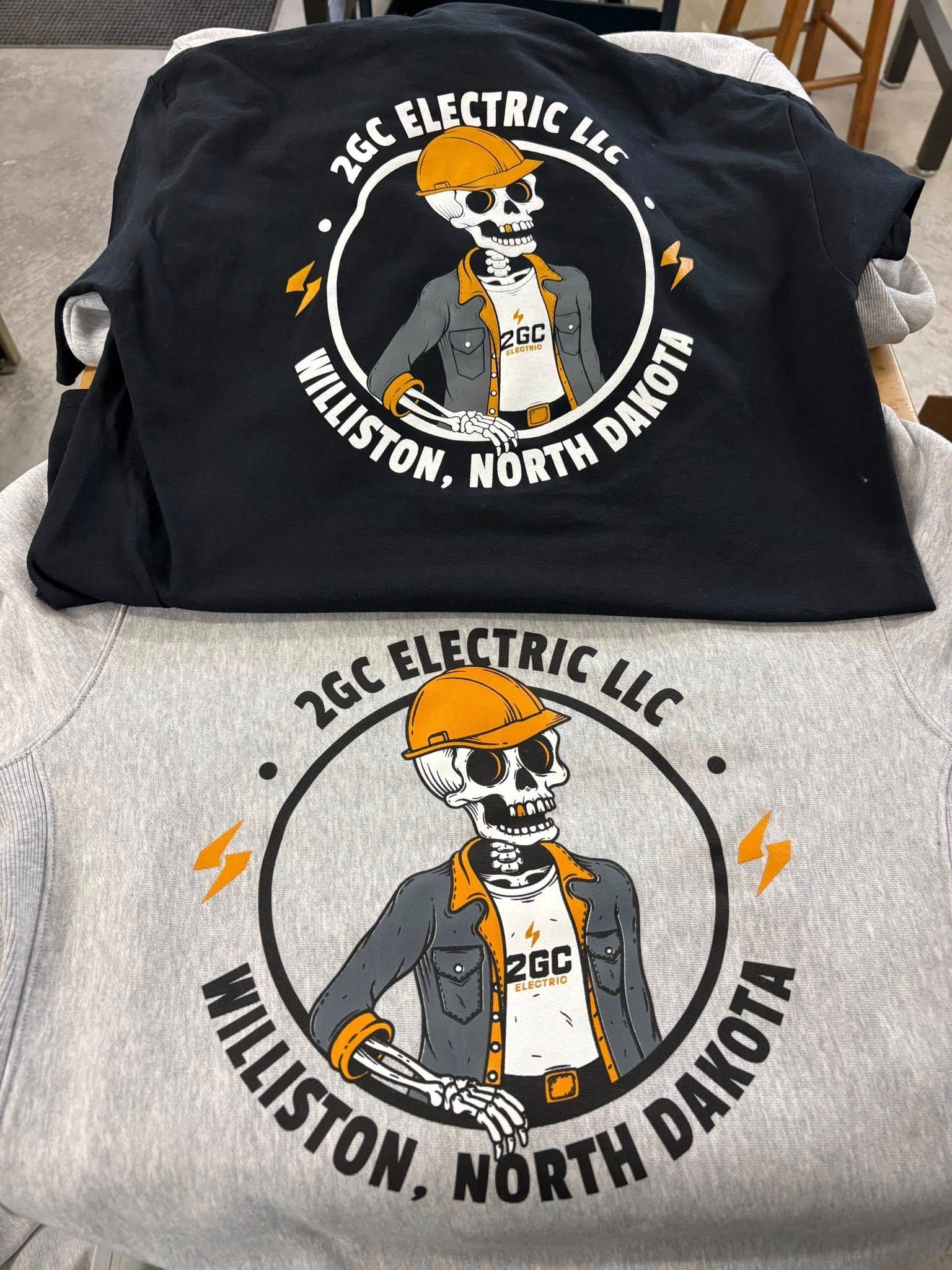
You start with a digital file of your design, which is printed onto a special film using water-based inks. A powder adhesive is applied to the wet ink, then cured. The film is then heat-pressed onto the garment, transferring the entire design in one step. Because the image is printed rather than layered through screens, there's no limit to the number of colors you can include, and fine details like small text or intricate illustrations remain legible.
After the transfer is applied, you'll notice graphics that hold their color through repeated washing and don't crack or peel the way some vinyl transfers do. The print flexes with the fabric, so it won't stiffen or restrict movement on athletic or fitted garments. Shirtworx adjusts heat press time and pressure based on fabric composition, ensuring the adhesive bonds fully without scorching or warping the material underneath.
DTF works well for mixed fabric types in a single order, so if you're printing the same design on cotton tees and polyester hoodies, you don't need separate setups. Turnaround is faster than screen printing for small batches because there's no screen preparation or color mixing involved. However, for orders over 50 pieces with simple designs, screen printing may still offer better cost efficiency.
Common Questions About DTF Printing
Businesses often ask when DTF makes sense, how it holds up over time, and what design considerations apply. These answers address the most common concerns.
What types of designs work best with DTF printing?
Designs with gradients, fine details, or more than six colors benefit most, since the process handles complexity without additional cost per color.
How does DTF hold up on workwear washed frequently?
The adhesive bonds well and resists fading, though prints may show slight wear after dozens of industrial wash cycles, similar to any heat-applied graphic.
Why does DTF have a slightly raised texture compared to screen printing?
The ink and adhesive layer sits on top of the fabric rather than soaking in, creating a tactile finish that's noticeable but not uncomfortable.
When should a business choose DTF over embroidery?
DTF is better for photographic images or designs with many colors, while embroidery suits simpler logos where texture and durability are priorities.
What file resolution is needed for DTF printing?
High-resolution files at 300 DPI ensure sharp edges and smooth gradients, especially important for designs with small text or detailed graphics.
DTF printing gives you flexibility for custom apparel without the setup costs of screen printing or the design limits of embroidery. Contact Shirtworx to discuss your project and request test prints to confirm the look and feel before committing to a full run.